
Bring Life-Saving Lung Cancer Screening to Your Community
USA Mobile Medical is one of the country's leading manufacturers of mobile lung cancer screening CT coaches — delivering purpose-built, turnkey programs that help hospitals, cancer centers, and health systems expand access to high-risk populations.
Lung Cancer Is the Most Preventable Cancer Death — Yet Most Go Unscreened
Lung cancer accounts for more deaths than breast, prostate, and pancreatic cancers combined. Early detection through low-dose CT (LDCT) screening is proven to save lives — yet access, capacity, and awareness gaps continue to limit program growth across the country.
Only 26% of lung cancer cases are diagnosed at an early stage, when treatment options are most effective and costs are dramatically lower.
The Communities That Need It Most Are the Hardest to Reach
Rural and underserved communities face the highest lung cancer burden — and the fewest resources to address it. An estimated 17–20% of the U.S. population lives in rural areas, yet they have access to only 3% of the country's practicing medical oncologists. Over 70% of U.S. counties have no access to medical oncologists at all.
Rural & Underserved Communities
Limited specialist access, older populations, and socioeconomic barriers lead to later diagnoses and worse outcomes. Mobile screening brings the solution directly to patients.
Firefighters & First Responders
According to NIOSH, firefighters face a 9% increase in cancer diagnosis and 14% higher cancer-related deaths. Carcinogen exposure on the job puts them at significant risk.
EMS / EMT Professionals
EMS workers often respond to the same toxic exposure events as firefighters, frequently with less protective equipment. Cancer is among the leading occupational health threats they face.

One of the Country's Leading Manufacturers of Mobile Lung Cancer Screening CT Coaches
USA Mobile Medical partners with hospitals, health systems, and imaging providers to plan, manufacture, and deploy purpose-built mobile lung cancer screening programs. From initial concept through long-term operation, we support your program at every stage — so you can focus on saving lives.
Request Our Mobile CT Lung Screening Program Guide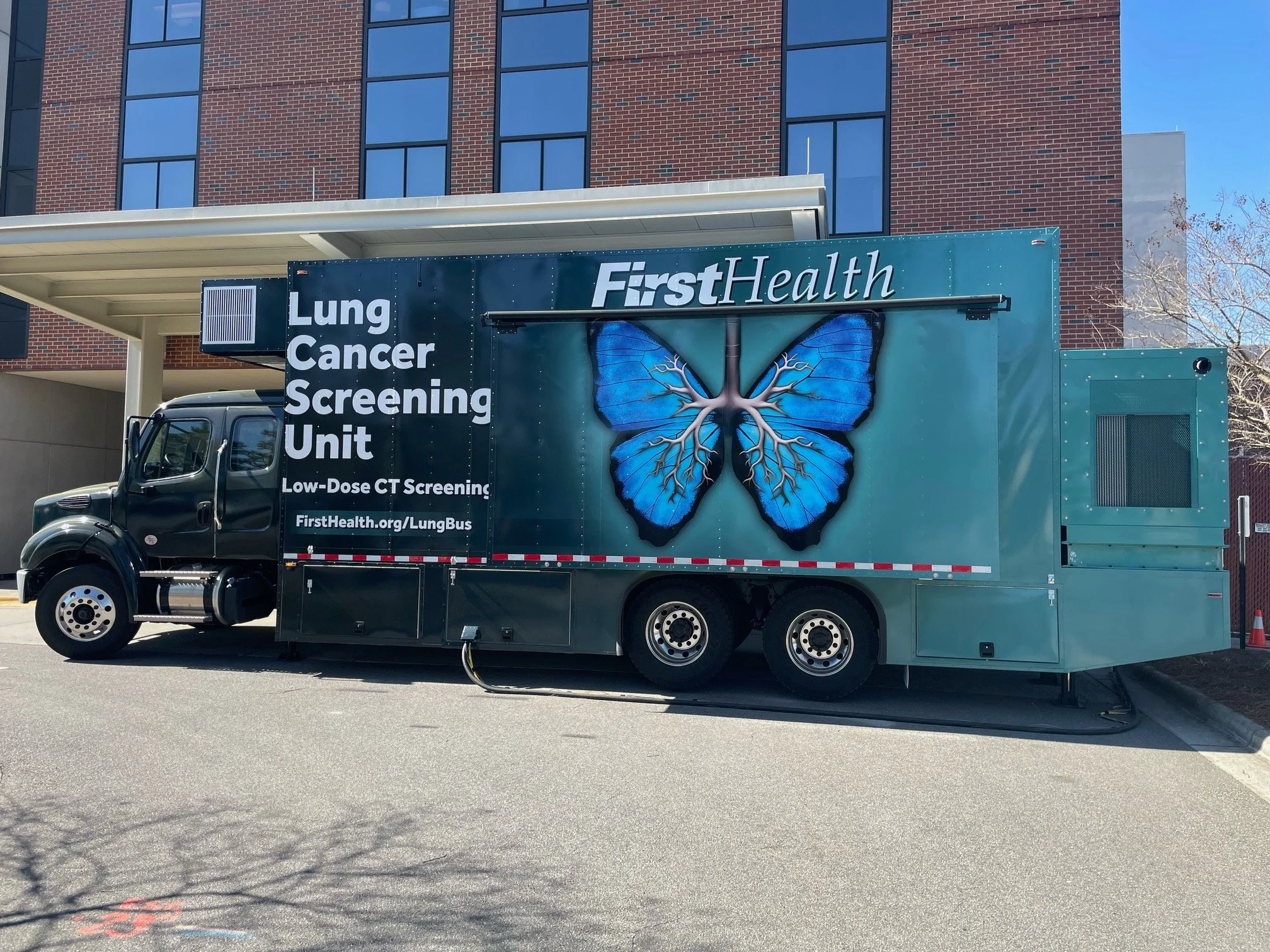
Purpose-Built Lung CT Coaches
Custom 40' and 45' drivable coaches and 48' trailer platforms designed specifically for low-dose CT lung cancer screening — with full clinical-grade interiors built to your specifications.
Turnkey Program Support
Deployment planning, site assessments, workflow design, transport logistics, ongoing maintenance, and technical support — everything you need to launch and sustain a high-performing program.
Philips Authorized CT Partner
USAMM holds a partnership agreement with Philips for new CT coach builds, giving you access to the Philips Incisive CT 5100 and CT 5300 — optimized for low-dose lung cancer screening protocols.
Scalable Program Models
Many partners begin with lung cancer screening and expand into additional services over time. Rental, lease, or purchase options — aligned with your goals.
Industry-Leading CT Platforms for Mobile Lung Cancer Screening
USAMM builds every mobile lung CT coach around world-class OEM systems — proven platforms already deployed in leading screening programs across the country. Our partnerships provide direct manufacturer support, optimized low-dose screening protocols, and access to the latest CT innovations.

Philips Incisive CT 5300 & 5100
USAMM holds a partnership agreement with Philips for new mobile CT coach builds — giving your program direct access to the Philips Incisive CT platform, optimized for low-dose lung cancer screening protocols, AI-driven reconstruction, and sustainable imaging performance.
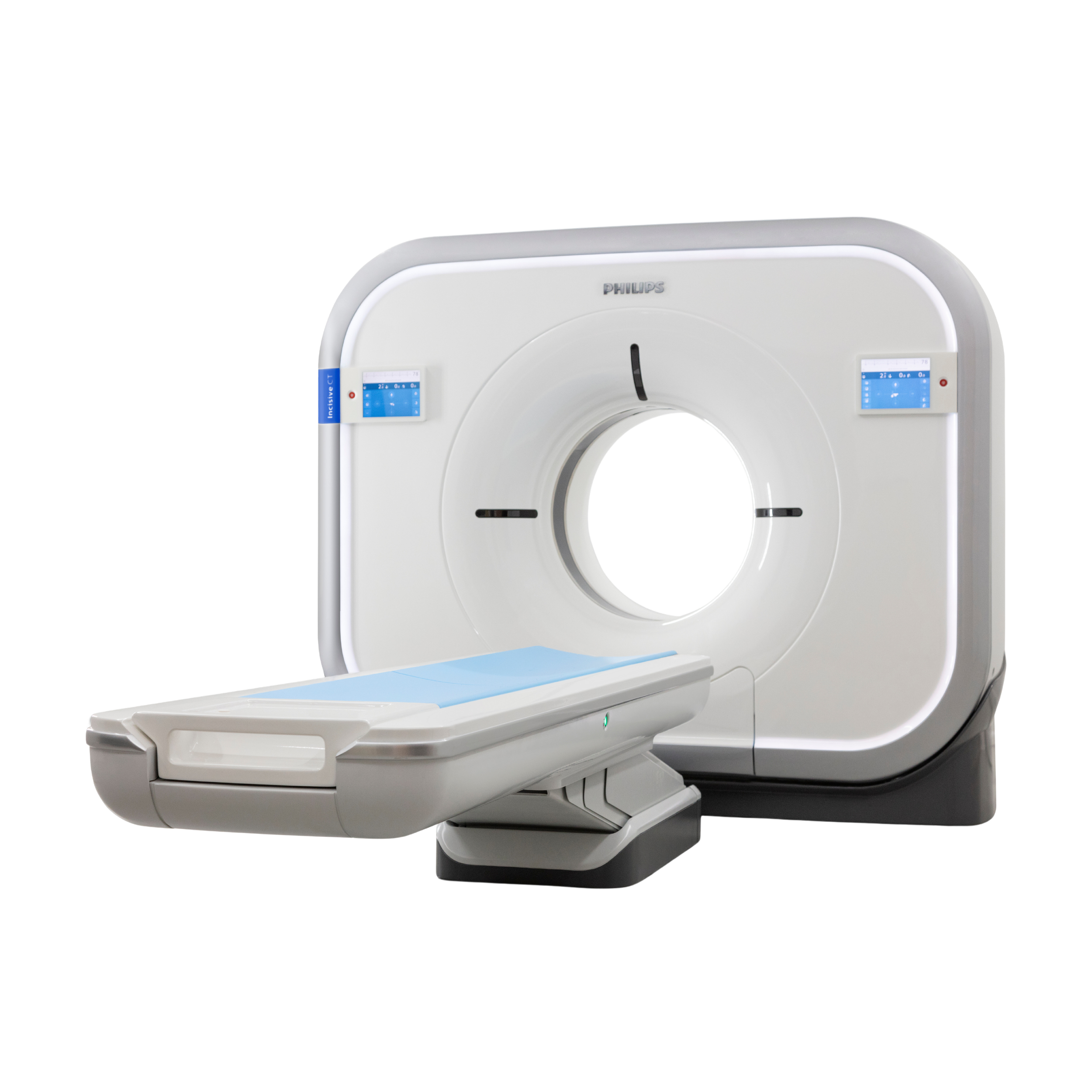
CT 5300 — The Future of Mobile Lung Screening
Next-generation Incisive CT with Precise Image AI reconstruction, enhanced low-dose performance, and the longest-life X-ray tube on the market — purpose-built for high-volume screening programs.
CT 5100 — Proven Value Platform
The established workhorse for mobile lung screening — field-proven across active USAMM deployments with reliable low-dose imaging and broad budget flexibility.

Canon Aquilion Prime SP
USAMM also integrates Canon Medical's Aquilion Prime SP into mobile lung CT coaches — delivering efficient, AI-enhanced imaging with Canon's signature PUREViSION detector technology and a proven track record in community-based lung cancer screening programs.

Aquilion Prime SP — Designed for Screening Programs
80-detector row CT with AiCE Deep Learning Reconstruction, ultra-low-dose lung protocols, and exceptional image quality — engineered for the high-throughput realities of mobile screening.
Multi-OEM Flexibility
Offering Canon alongside Philips gives your program real choice — so we can match the right platform to your clinical goals, budget, and long-term service strategy.
Choose the Right Platform for Your Program
USAMM offers two primary mobile CT platforms for lung cancer screening — each designed to match different deployment goals, patient volumes, and program models.
Drivable CT Coach
40' & 45' Available · No Separate Tractor Required
- Single, self-contained vehicle — cab and imaging coach in one
- 40' and 45' configurations; customizable interior layouts
- Requires CDL-B driver; no semi-truck tractor needed
- Wheelchair lift & ADA-compliant patient entry
- Full radiation shielding per NCRP 147 standards
- 185 kW onboard diesel generator; shore power capable
- All OEM CT systems supported; Philips partnership for new builds
Community outreach programs, regional & multi-site screening initiatives, hospitals needing flexible deployment without dedicated tractor logistics.

Trailer-Based CT Platform
48' New & Reconditioned Options · Semi-Trailer Configuration
- 48' semi-trailer transported via dedicated tractor
- Larger interior footprint — dedicated scan, control, & support spaces
- Two (2) slide-out sections for expanded workflow area
- Available new or reconditioned to balance timeline & budget
- Palfinger ILM 20 patient lift gate (2,000 lb capacity)
- 45 kW Tier 4 diesel generator; chiller, dual-zone HVAC
- Designed for long-term campus placement or recurring outreach
Hospital campus deployments, long-term programs with high patient throughput, or organizations needing a permanent-feeling mobile imaging presence.

Timeline Estimates
*Build timelines are conservative estimates. Custom-built mobile units are significant investments, and we prioritize delivering a unit built precisely to your specifications. Timelines reflect current market conditions and may shift due to manufacturing schedules, equipment lead times, regulatory requirements, or other external factors.
All platforms available for purchase, lease, or rental. Contact us to discuss what's right for your program →
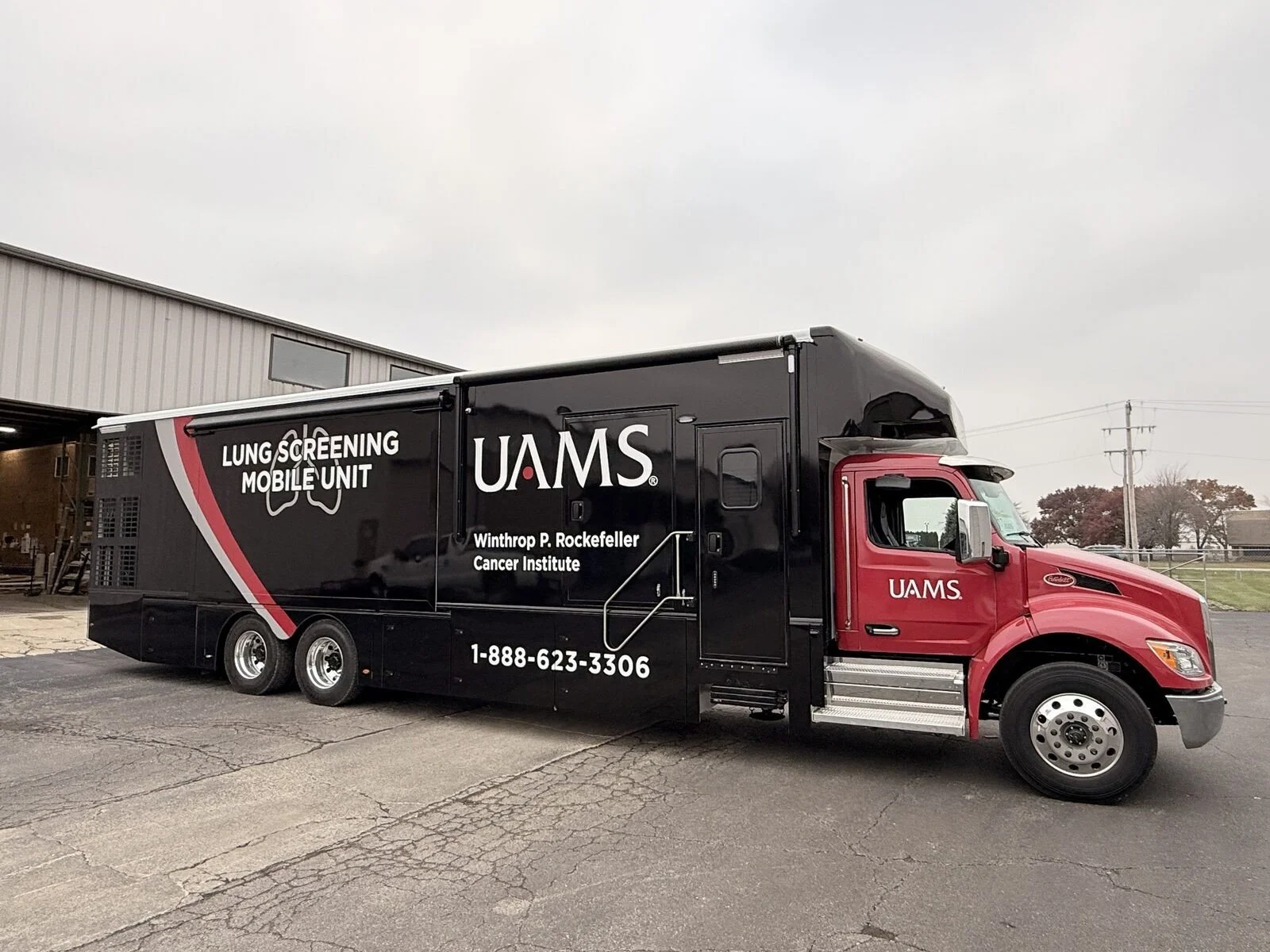
University of Arkansas for Medical Sciences (UAMS)
USA Mobile Medical delivered three custom 45' Drivable Lung Cancer Screening CT Coaches to UAMS's Winthrop P. Rockefeller Cancer Institute — in partnership with Philips — to support UAMS's statewide lung cancer screening and early detection programs.
These purpose-built coaches extend UAMS's reach beyond traditional hospital settings, providing mobile access to high-risk populations across both urban and rural communities throughout Arkansas. Each coach features advanced low-dose CT scanning technology, a dedicated patient intake space, and custom exterior branding aligned with UAMS's cancer prevention mission.
This multi-unit deployment supports UAMS's long-term strategy to expand screening capacity, improve early detection rates, and deliver consistent, high-quality care statewide.
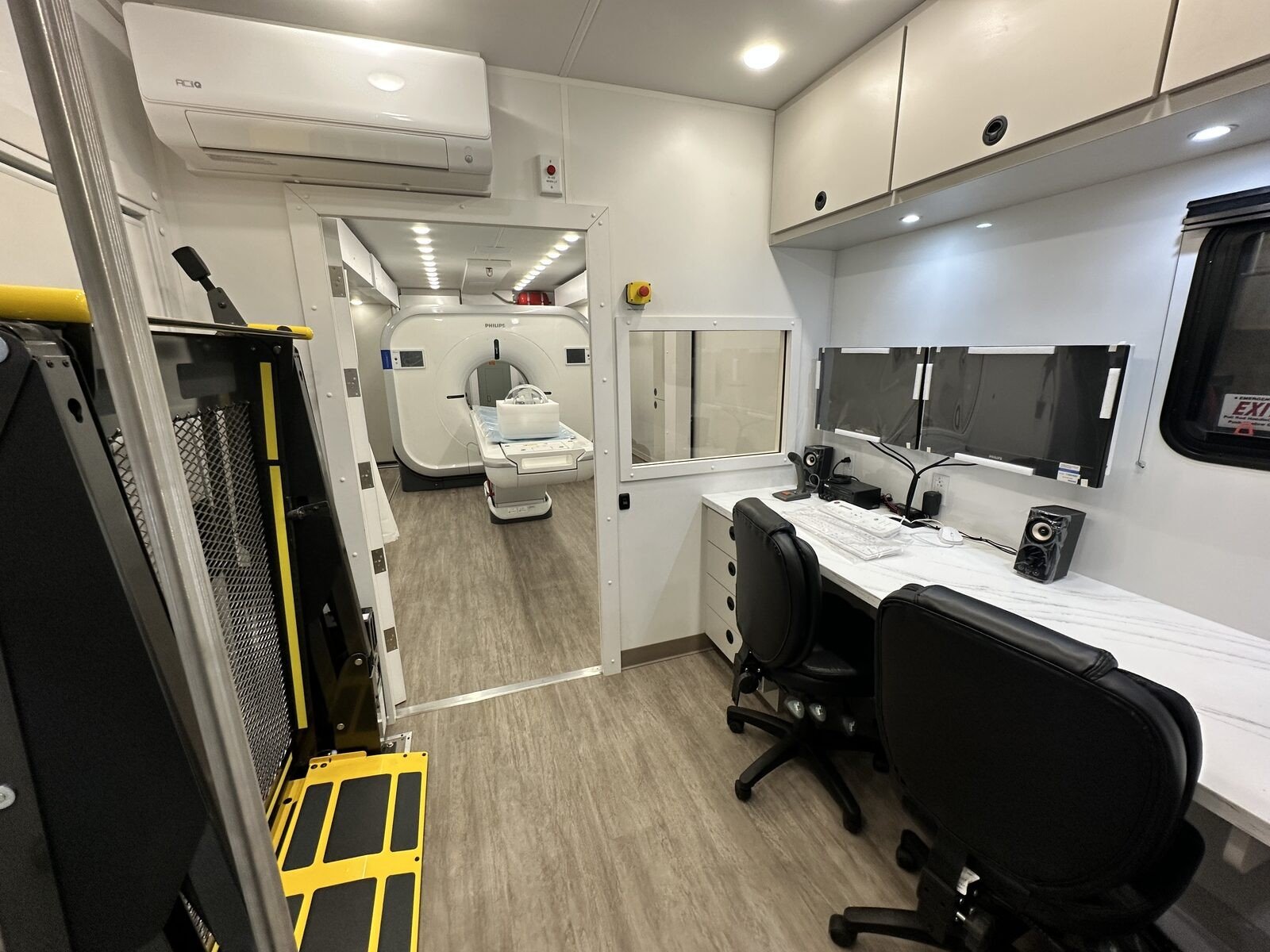
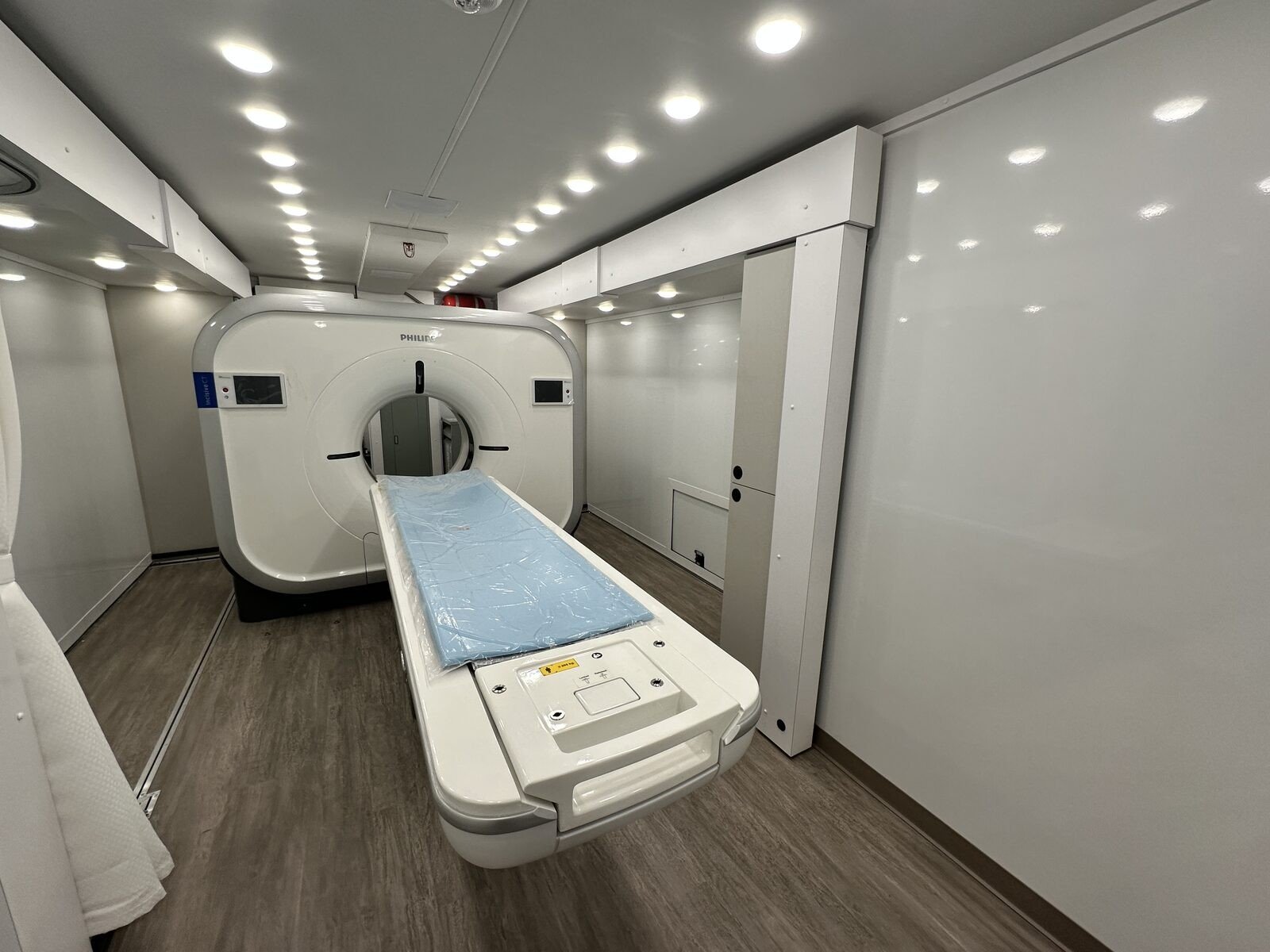
Experience Our Mobile Lung CT Coach
Take an immersive 360° virtual tour — explore the interior, imaging suite, and patient experience.
Test Your Community's Need — Start with a Rental
Not every program starts with a new build. A rental lets you launch quickly, gather real-world data, and prove program viability — before committing to a long-term investment. It's one of the smartest ways we help health systems and cancer centers get started.
Standard rental deployments in as little as two weeks — so your community starts getting screened while your long-term program takes shape.
Gather Community Data First
Understand real screening demand in your service area before investing. Track patient volumes, geographic reach, demographics, and referral patterns to build a data-driven case for a permanent program.
Deploy in Weeks, Not Months
Standard rentals deploy within two weeks — with emergency placements available in as little as 48–72 hours. Start screening patients while you plan your long-term strategy.
Prove Program Viability
Present real outcomes to hospital leadership, boards, and grant committees. Nothing builds support like demonstrated patient impact and a working proof-of-concept in your own community.
Seamless Transition to Ownership
When you're ready to invest, USAMM helps you transition from rental to lease, rent-to-own, or a fully custom new build — with no disruption to your screening operations.
Launching a Mobile Lung Cancer Screening Program
Bringing lung cancer screening to underserved communities requires strategic planning, the right technology, and strong partnerships. Here's how USAMM helps you get there.
Assess Community Needs & Define Goals
Conduct a community health assessment to identify high-risk populations, map geographic coverage gaps, and set measurable program goals such as screening volumes and early detection targets.
Secure Funding & Financial Support
Explore federal and state grants, nonprofit funding (LCRF, LUNGevity, ALA/ACS), hospital budget allocations, and USAMM's flexible lease and financing options to minimize upfront capital.
Select the Right Mobile Platform
Choose your platform (drivable coach or trailer), OEM CT system, and configuration based on patient volume, deployment frequency, site access, and program scalability goals.
Build Your Screening Team & Train Staff
Recruit technologists, nurses, and program coordinators. Establish workflows for scheduling, image interpretation, and follow-up care. USAMM supports onboarding and go-live readiness.
Develop Community Outreach & Awareness
Partner with local clinics, employers, fire departments, and public health organizations. Use social media, direct outreach, and health fairs to inform and engage eligible patients.
Launch, Track & Scale Your Program
Begin with a pilot phase to refine logistics. Use data and outcomes tracking to measure impact. Scale deployment days, locations, or units as screening demand grows.
Ready to get started? Our team has guided multiple health systems through every step of this process.
Schedule a Program ConsultationA Scalable Investment
in Lung Cancer Screening
Mobile lung cancer screening programs deliver faster deployment, lower upfront capital, and greater flexibility than building new fixed-site CT suites — while generating measurable downstream clinical and financial value.
Drivable CT Coach
Purpose-built 40' or 45' drivable CT coach, depending on size, OEM integration, slide-outs, and interior customization.
CT System Cost
Low-dose CT systems vary by manufacturer and configuration. New Philips Incisive CT 5100 / 5300 builds command the high end of the range.
Operational Costs
Staffing (CT techs, CDL drivers), maintenance, transportation, insurance, and community outreach logistics vary by market and utilization.
These figures are representative high-level ranges for planning purposes, not exact quotes. Contact us for a program-specific investment model.
Lower Upfront Capital
Eliminates permanent construction, facility expansion, and long-term real estate commitments.
Faster Time to Impact
Launch significantly faster than fixed-site builds, reaching high-risk populations sooner.
Predictable Operating Costs
Rental and lease structures offer budgetable costs, avoiding large capital expenditure spikes.
Scalable by Design
Grow by adding screening days, locations, or additional coaches as participation increases.
We Can Help
Not sure where to start with funding? Our team helps identify grants, financing structures, and partnerships tailored to your program.
Funding Pathways for Your Program
Launching a lung cancer screening program requires investment — but a range of grants, financing models, and partnerships can make it more accessible than you might think.
Lung Cancer Research Foundation (LCRF)
Supports prevention and early detection initiatives focused on improving lung cancer screening uptake and outcomes.
Visit LCRFLUNGevity Foundation
Funds early detection and health equity research programs that address disparities in lung cancer screening access.
Visit LUNGevityThe Mark Foundation
Provides significant funding for innovative early cancer detection approaches, including mobile lung screening.
Visit The Mark FoundationAmerican Lung Association & American Cancer Society
Offer research and programmatic grants supporting lung health, screening initiatives, and early diagnosis.
Federal & State Initiatives
Emerging federal legislation and state health grants increasingly prioritize mobile cancer screening — particularly for rural and underserved communities.
We Can Help
Contact us for help with FundingMobile screening programs eliminate the need for permanent construction or long-term real estate commitments. Hospitals can deploy screening capacity without building new imaging suites — making mobile a lower-risk, more flexible alternative to fixed-site expansion.
LDCT Screening Eligibility & At-Risk Populations
Understanding who qualifies for low-dose CT screening — and who is most at risk — is the foundation of an effective mobile lung cancer screening program.
USPSTF Screening Guidelines (2021)
- Age 50–80 years — annual low-dose CT screening recommended
- 20 pack-year smoking history — (e.g., 1 pack/day for 20 years, or 2 packs/day for 10 years)
- Currently smoke or have quit within the past 15 years
- Screening should be discontinued if the person has not smoked in 15+ years or develops a health problem that limits life expectancy or ability to have curative lung surgery
Source: U.S. Preventive Services Task Force (USPSTF), 2021 Recommendation. Medicare and most private insurers cover annual LDCT screening for eligible individuals at no cost-sharing.
High-Priority At-Risk Populations
Rural & Underserved Communities
17–20% of the U.S. population lives in rural areas with access to only 3% of practicing oncologists. Over 70% of counties have no oncologists at all.
Firefighters
Regular carcinogen exposure leads to a 9% increase in cancer diagnosis and 14% higher cancer-related deaths (NIOSH).
EMS / EMT Professionals
Often younger than traditional screening age guidelines, but face similar carcinogen exposure risks — particularly without adequate PPE at toxic events.
Occupational Exposure Groups
Workers in manufacturing, mining, construction, and agriculture with known asbestos, radon, or chemical carcinogen exposure face elevated lifetime lung cancer risk.
Flexible Financing for Every Lung CT Screening Program
We understand that every program has different financial constraints and goals. USAMM offers multiple pathways to get the mobile platform you need — without upfront capital burden.
Short-Term Rental
6-week to 6-month deployments with full maintenance and support. Perfect for pilots, proof-of-concept programs, and seasonal initiatives.
Multi-Year Program
Long-term lease arrangements (2-5+ years) with predictable monthly payments and dedicated program support — ideal for sustained operations.
Rent-to-Own
Start with rental payments that apply toward ownership. Transition from short-term testing to permanent asset ownership when ready.
Program ROI & Financial Impact
Mobile lung cancer screening programs deliver measurable ROI through volume throughput, grant funding eligibility, and patient retention. USAMM helps quantify program economics and identify funding opportunities — including federal grants, nonprofit partnerships, and insurance reimbursement models — so you can build a financially sustainable screening program from day one.
Ready to Bring Lung Cancer Screening to Your Community?
Whether you're launching a new program, expanding an existing initiative, or exploring what's possible for your patient population — USAMM's engineering team and program specialists are ready to help you build a solution that delivers real impact.
